Frequently Asked Questions
What are the advantages of glued laminated timber compared to traditional timber?
Glued laminated timber structures are more durable and stable than solid wood structures. They can be produced in large sizes and various shapes (curved or straight), thus providing greater design flexibility.
Is glued laminated timber suitable for both indoor and outdoor use?
Yes, glued laminated timber can be used both indoors and outdoors, but if used outdoors, special treatment or coating may be required for protection against moisture and weather conditions.
How is glued laminated timber produced?
The production of glued laminated timber involves selecting and preparing high-quality timber, then gluing the layers together under controlled pressure and temperature. This process ensures consistent quality and strength.
What are the common applications of glued laminated timber?
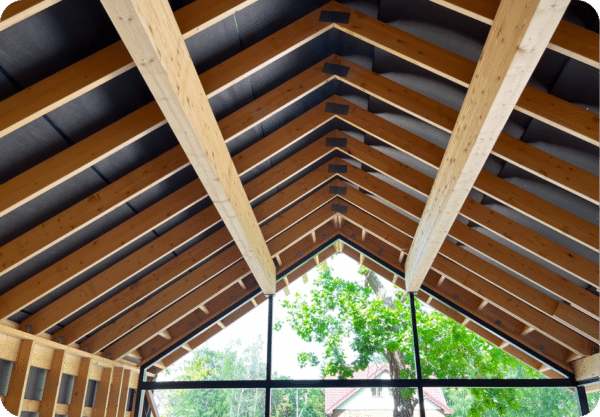
Glued laminated timber is used in various projects, including residential and commercial buildings, bridges, stadiums, and even art installations.
Are glued laminated timber beams fire resistant?
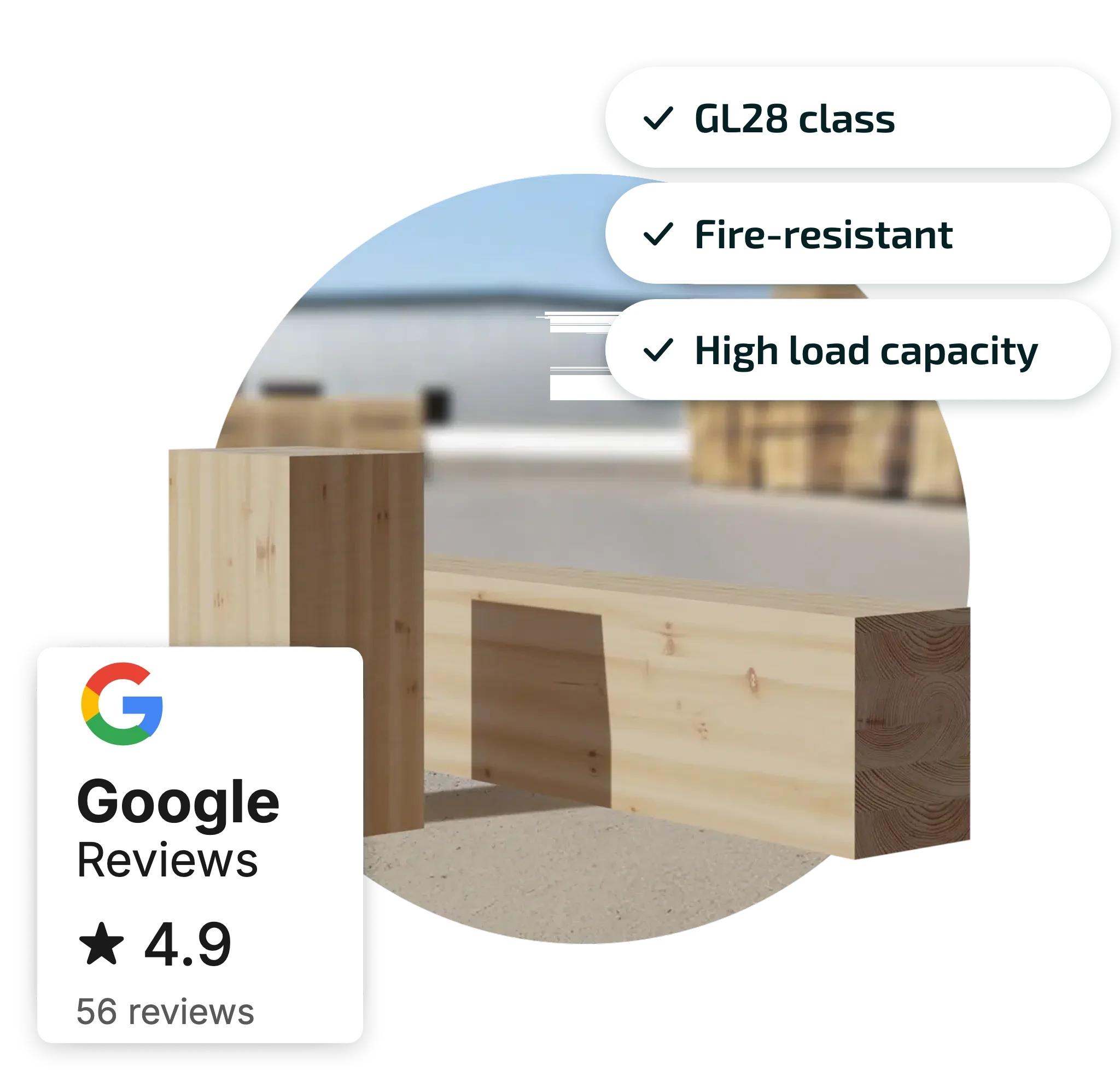
Glued laminated timber beams are generally more fire-resistant than ordinary wood, because the gluing process and dimensions allow them to react more slowly to fire exposure. When wood starts to burn, the outer surface carbonizes, forming a protective layer that shields the inner part from heat. This carbonization layer slows down the spread of fire and allows the beam to maintain its structure longer. However, complete fire resistance will depend on specific circumstances, including beam dimensions, coatings, and the conditions under which they are used. In some cases, it may be necessary to use additional fire safetytreatment or cladding.